Table of Contents
Roulette is a popular casino game that has been around for centuries. It is a game of chance that involves a spinning wheel with numbered pockets and a ball that is dropped onto the wheel. Players place bets on where they think the ball will land, and if they guess correctly, they win.
While the game of roulette may seem simple, the mechanics behind the wheel are actually quite complex. The roulette wheel circuit, for example, is made up of several different components that work together to create a random outcome. These components include the LED display stage, the wheel sound audio stage, the voltage controlled oscillator, and the touch sensitive/monostable circuit. Understanding how each of these components works is essential for anyone who wants to build or repair a roulette wheel circuit.
This article will provide a breakdown of the different components of a roulette wheel circuit and explain how they work together to create a random outcome. It will also provide instructions for building and repairing a roulette wheel circuit, as well as tips for playing the game of roulette. Whether you are a seasoned roulette player or a beginner who is just starting out, this article has something for everyone.
We will also be reviewing and giving our opinion on the most popular roulette wheel circuit available. We will be looking at factors such as ease of use, accuracy, and overall quality. Whether you are a hobbyist looking to build your own roulette wheel circuit or a professional looking for a reliable solution, this article will provide valuable insights and information.
Understanding the Roulette Wheel Circuit
Components of the Roulette Wheel Circuit
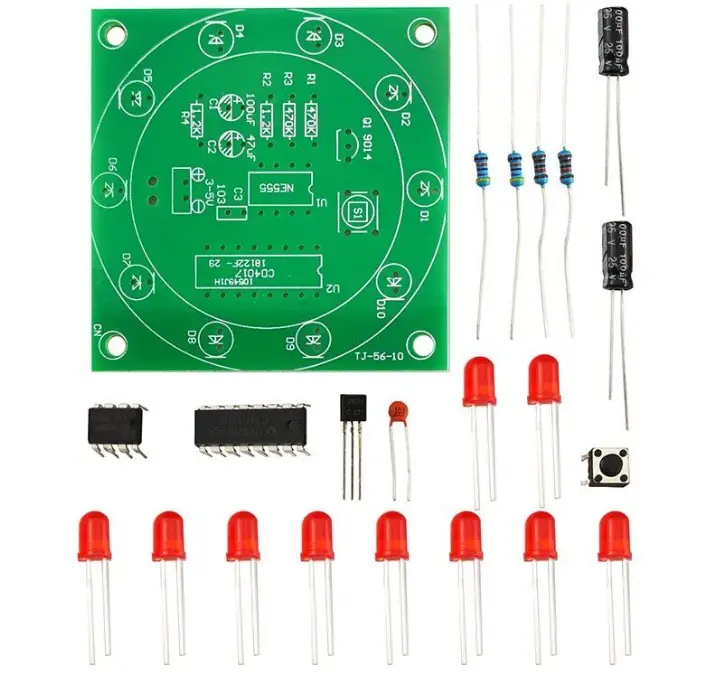
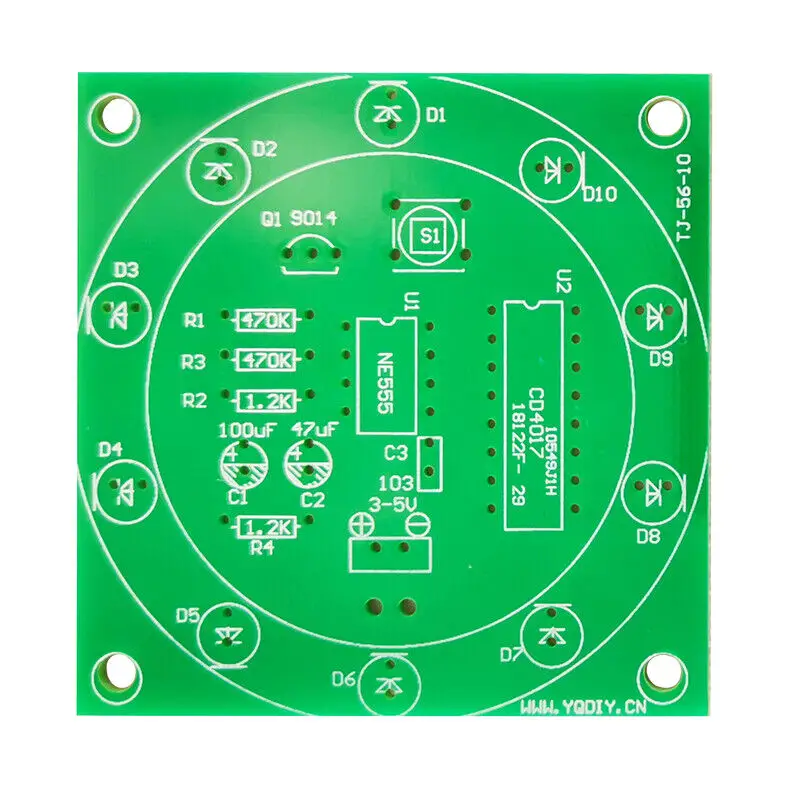
The Roulette Wheel Circuit is a simple electronic circuit that can be built using a few basic electronic components. The main components of the circuit are:
- 555 Timer IC
- 4017 Counter IC
- LEDs
- Resistors
- Capacitors
- Transistors
You can view a set that has all of the components using this link here.
How the Roulette Wheel Circuit Works
The Roulette Wheel Circuit is based on the 555 Timer and 4017 Counter ICs. The 555 Timer IC is used to generate clock pulses, which are used to drive the 4017 Counter IC. The 4017 Counter IC is a decade counter, which means it counts from 0 to 9 and then resets back to 0. The outputs of the 4017 Counter IC are connected to LEDs, which light up in sequence as the counter counts.
The Roulette Wheel Circuit works by using the clock pulses generated by the 555 Timer IC to drive the 4017 Counter IC. The clock pulses cause the counter to count up and the LEDs to light up in sequence. When the clock pulses stop, the counter stops counting and one of the LEDs remains lit, indicating the winning number. The circuit can be reset by pressing a button, which resets the counter back to 0 and starts the sequence over again.
The Roulette Wheel Circuit can be modified to include additional features, such as sound effects, random number generators, and touch-sensitive buttons. The circuit can also be built using different types of electronic components, such as microcontrollers and integrated circuits, to achieve different levels of complexity and functionality.
Function of the Circuit
The 555 timer IC is used as an oscillator and pulse generator in the circuit. It generates a pulse that is fed to the decade counter CD IC 4017. The counter counts the number of pulses and activates the LEDs in a sequence. When the push button is pressed, the LEDs start to rotate in a circular motion at full speed. Gradually, the speed of the LEDs slows down until it stops at a random LED. The randomness of the selection depends on the time for which the push button remains switched on by the finger. The potentiometer is used to adjust the speed of the LEDs.
The circuit is powered by a 9V battery. The resistors are used to limit the current flowing through the LEDs. The capacitor is used to filter out any noise in the circuit.
Overall, the roulette wheel circuit is a simple and effective way to randomly select a number from a set of numbers. It is commonly used in games and other applications where a random selection is required.
Common Breakdowns of the Roulette Wheel Circuit
Broken Wiring
One of the most common breakdowns of the roulette wheel circuit is broken wiring. This can occur due to a variety of reasons, including wear and tear, improper installation, or accidental damage. Broken wiring can cause the circuit to malfunction, resulting in the wheel not spinning or stopping at the wrong number.
To fix broken wiring, it is necessary to identify the broken wire and replace it. This can be done by using a multimeter to test the wiring for continuity and then replacing the broken wire with a new one. It is important to ensure that the new wire is of the same gauge and type as the old one.
Malfunctioning Sensors
The sensors in the roulette wheel circuit are responsible for detecting the position of the wheel and transmitting this information to the circuit board. Malfunctioning sensors can cause the circuit to malfunction, resulting in the wheel not spinning or stopping at the wrong number.
To fix malfunctioning sensors, it is necessary to identify the faulty sensor and replace it. This can be done by using a multimeter to test the sensor for continuity and then replacing the faulty sensor with a new one. It is important to ensure that the new sensor is of the same type and specification as the old one.
Broken Motor
The motor in the roulette wheel circuit is responsible for spinning the wheel. A broken motor can cause the circuit to malfunction, resulting in the wheel not spinning or spinning too slowly. This can be caused by wear and tear, improper installation, or accidental damage.
To fix a broken motor, it is necessary to replace it with a new one. It is important to ensure that the new motor is of the same specification and type as the old one. It is also important to ensure that the motor is properly installed and connected to the circuit board.
Conclusion and Thoughts:
A roulette wheel circuit is a device that can be used to predict the outcome of a roulette game. These circuits use various methods to analyze the spinning of the wheel and the movement of the ball, and then use that information to make a prediction about where the ball will land. While these circuits are not foolproof, they can increase the odds of winning, and are a popular tool among serious roulette players.
While there is no guaranteed way to win at roulette, using a roulette wheel circuit can be an effective way to improve your odds. These circuits use advanced technology to analyze the game and make predictions, and can be a valuable tool for serious players. Whether you’re a seasoned roulette veteran or a newcomer to the game, a roulette wheel circuit can help you increase your chances of winning and take your game to the next level.
If you are into more electronics we build, then we suggest you check out our projects and stories on our blog.